Tape Echo & Delay – Information and Tips
Because I regularly receive questions about tape echo and delay units, here is some additional information. This is meant as general guidance — I do not have personal experience with every device, so I cannot guarantee that all combinations will always work.
Using an 8‑track cartridge
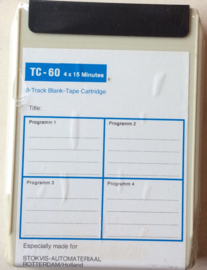
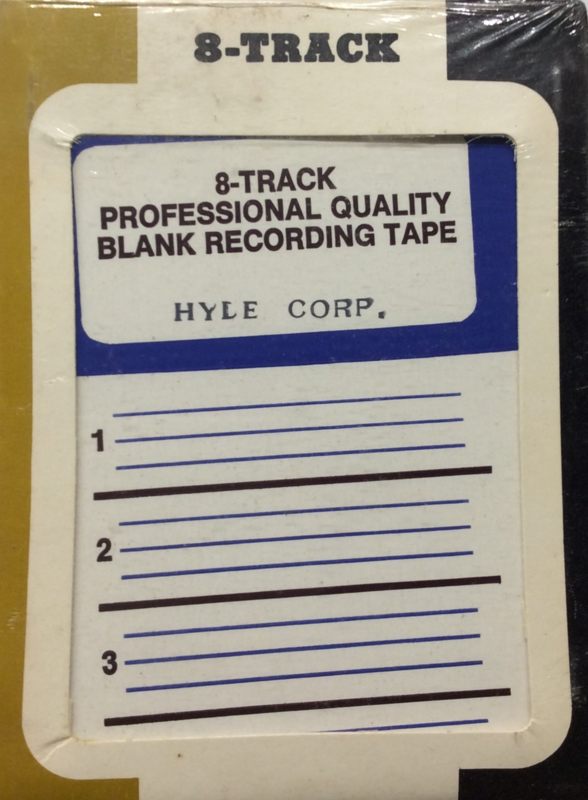
If your tape‑echo unit accepts a standard 8‑track cartridge, you can use an empty tape such as the blank cartridges shown at the bottom of this page. Some echo units require a small modification to the cartridge to make it fit or run smoothly.
PlayTape‑size cartridges
Certain echo machines use a smaller cassette, roughly the size of a PlayTape. See the PlayTape page for reference. These tapes are rare. 8trackavenue offers a service where an old PlayTape can be refilled with new tape. If you are looking for one, keep an eye on eBay — prices vary widely, but with patience you can sometimes find one at a reasonable cost.
Tape loops
For tape loops, you can use tape taken from an empty 8‑track cartridge or the loose tape offered on this page. This works for many DIY echo setups.
What is Tape Echo / Tape Delay?
Tape‑echo and tape‑delay are among the most characteristic effects in the history of audio recording. Long before digital effects existed, musicians and studios created echo using real magnetic tape.
The principle is simple:
a record head captures the sound
one or more playback heads reproduce the same sound a moment later
the distance between the heads determines the delay time
The result is warm, organic and slightly unpredictable — exactly why many musicians love it.
A short history
The first tape‑echo units appeared in the 1950s, when tape recorders became more reliable. Engineers discovered that placing two or three heads in sequence created a natural echo effect.
Famous brands include: Echoplex, Binson, Watkins Copicat, Roland Space Echo.
These devices became popular with guitarists, keyboard players and studio producers.
Using an 8‑track as a tape delay
Although 8‑track cartridges are mainly known as music carriers, they can technically be used as tape‑delay loops. The tape runs continuously, and the distance between the record and playback heads determines the delay time.
It is not a standard application, but creative musicians and hobbyists sometimes use 8‑tracks as experimental delay machines. The result is raw, lo‑fi and unique — ideal for sound design or vintage effects.
Apollon / Apollo Tape‑Echo Units
In the 1970s and 1980s, compact tape‑echo devices such as the Apollon (also written as Apollo) appeared. These units used a small internal tape loop and multiple heads to create different delay times.
Typical features
warm, analogue echo
adjustable delay time
feedback for multiple repeats
characteristic tape wear for a vintage sound
Today these units are popular with collectors and musicians looking for an authentic analogue effect.